Automated Continuous Surgical Sharps Management
SmartCountOR combines purpose-built hardware, computer vision, artificial intelligence, and digital workflow automation to modernize intraoperative surgical sharps counting, improve accountability, and support operating room safety for patients and hospital staff.
Surgical sharps counting remains one of the most important safety processes in the operating room. The current process is manual, error-prone, and has not changed for decades. SmartCountOR developed patented technology designed to automate the process, improve count accuracy, streamline documentation, and reduce workflow disruption.
A Critical Safety Process Still Relies on Manual Counting
Surgical sharps counts are a standard part of perioperative safety practice. Counts are performed before procedures begin, during key phases of surgery, during staff transitions, when additional sharps are introduced, and before wound closure. The process exists for a simple reason: every sharps item must be accounted for, per standards set by the Association of periOperative Registered Nurses (AORN) and the Association of Surgical Technologists (AST).
Despite advances throughout the operating room, surgical sharps counting continues to rely completely on visual verification, manual documentation, and human reconciliation. Published studies have reported count discrepancies occurring in as many as one in eight surgical procedures, with sharps and needles representing the most frequently miscounted category.
Required Throughout the Procedure
Sharps counts occur at multiple defined points during a procedure and whenever count conditions change — at opening, during critical transitions, whenever OR staff changes, and before wound closure.
Manual Verification
Sharps are visually counted, documented, and reconciled through standardized counting protocols that depend on the sustained attention of the perioperative team.
High-Consequence Process
Count discrepancies require immediate investigation — Retained Surgical Items (RSIs) are classified as never events in patient safety frameworks. 88% of RSI incidents occur when the count is believed correct, and RSI risk rises roughly 100x when a miscount is present.
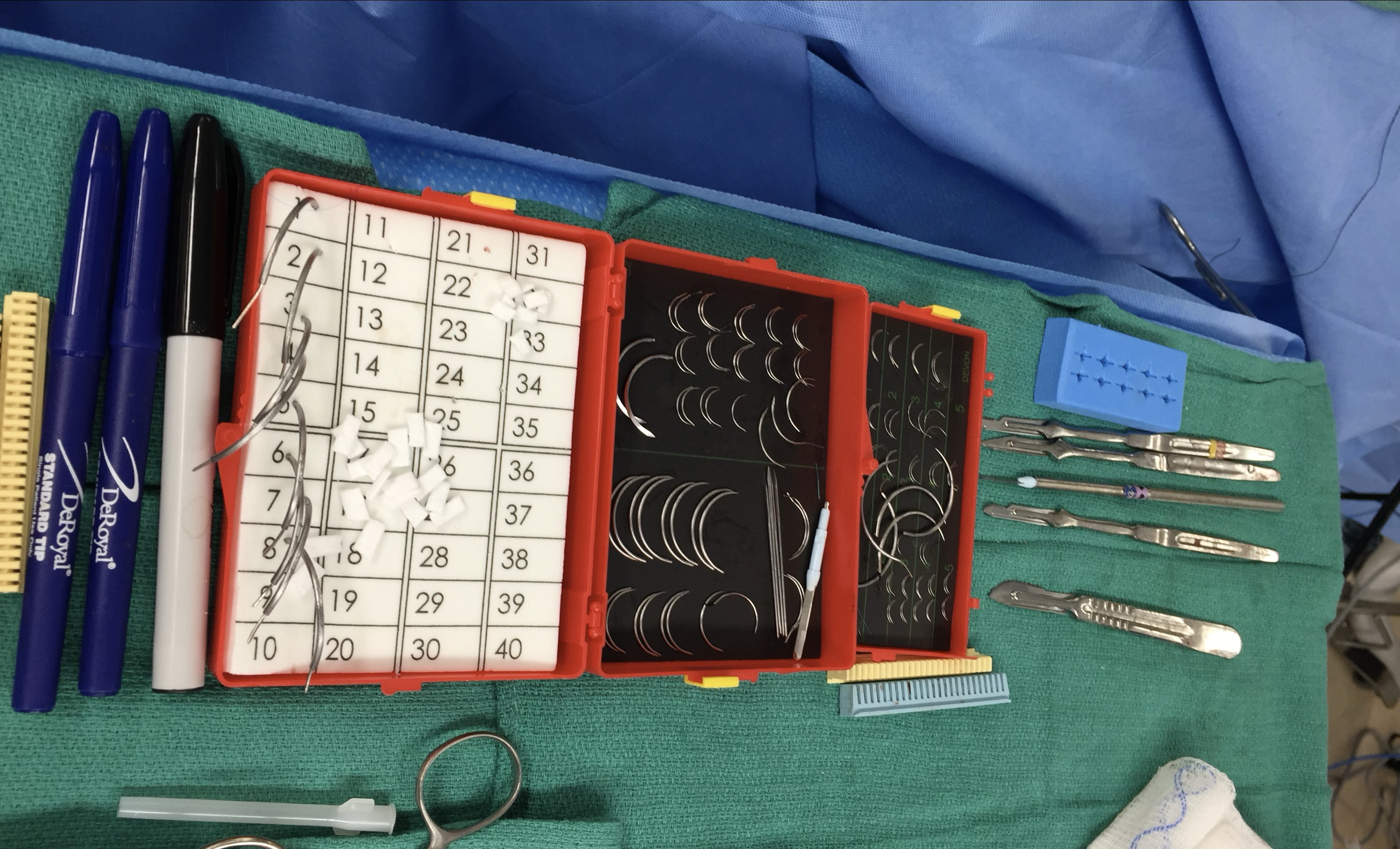
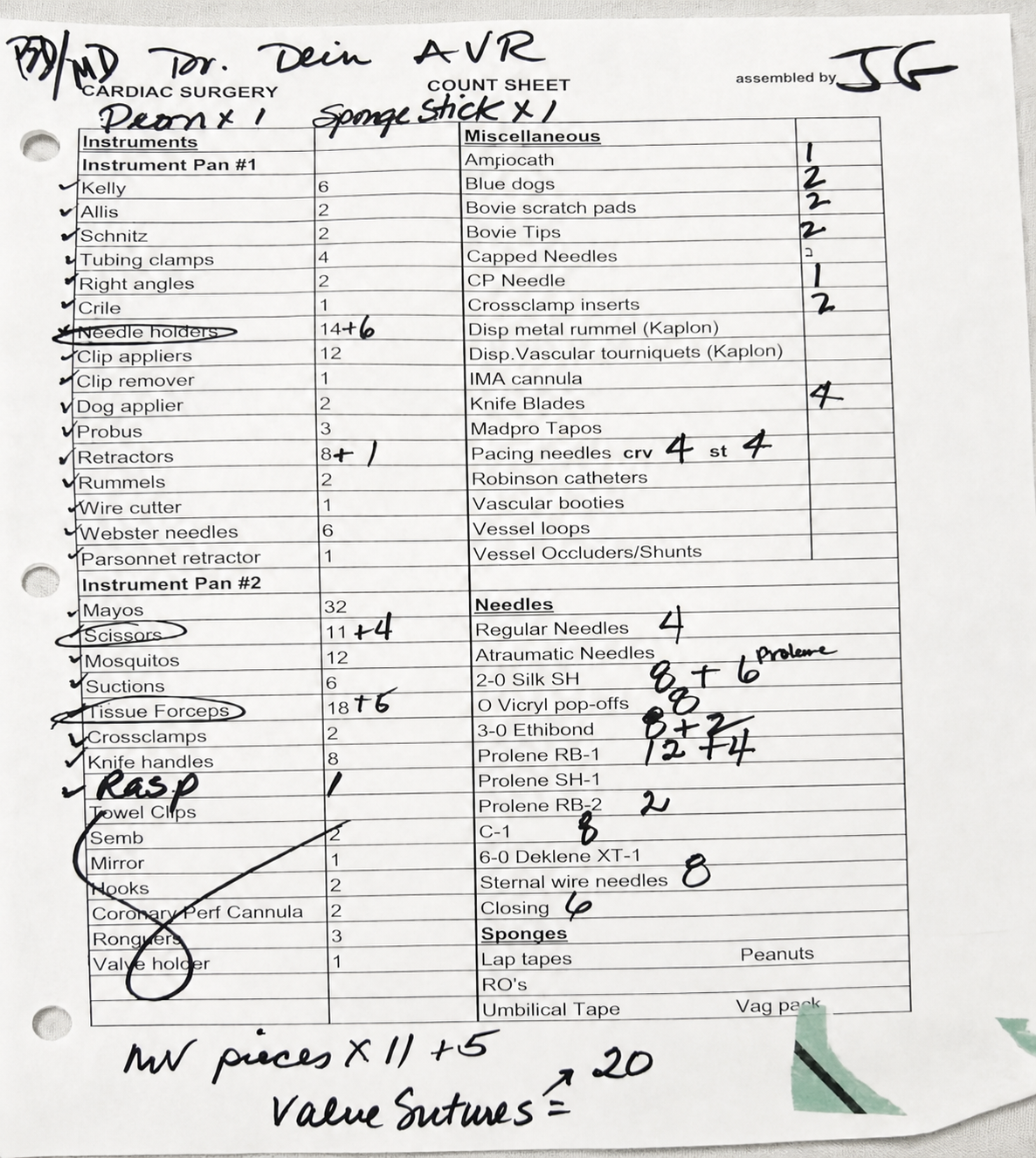
Actual images from one of Dr. Dein's cases showing the manual sharps counting tray and count sheet.
Sharps Require a Different Technology Approach
Technology-assisted counting has advanced significantly in adjacent categories. Sponges have benefited from radiofrequency and barcode-assisted systems. Instrument tracking is under development with RFID-based approaches. Surgical needles — the most frequently miscounted item — remain the last major gap.
Unlike sponges and larger instruments, traditional tagging approaches are not practical for surgical needles due to their size, form factor, and intended clinical use. SmartCountOR was created specifically to address this challenge.
Tagging Is Not Practical for Needles
Radiofrequency and RFID systems require tagged items. Surgical needles range from 3.5mm to 75mm, and can't practically carry tags or barcodes without interfering with their intended use. This is not a gap that can be closed with existing tracking approaches.
Computer Vision and AI Detection
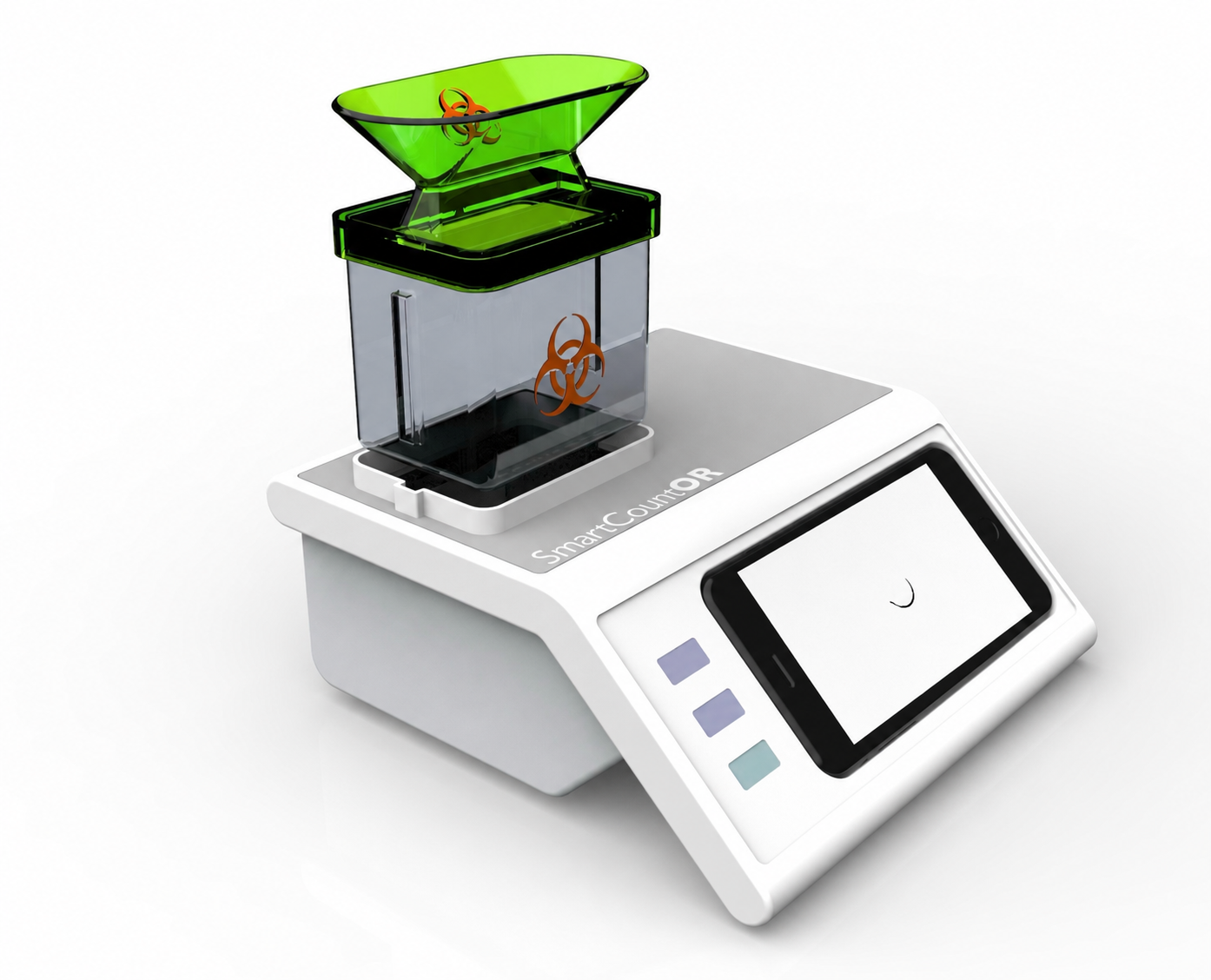
SmartCountOR applies computer vision and artificial intelligence to detect and classify surgical needles better than the human eye. SmartCountOR uses an optimized, controlled environment — purpose-built to support reliable detection and classification across the range of sizes and types used in clinical practice.
Designed Around the OR Process
Needles are counted as they are disposed — integrating into the existing workflow without additional handling steps. The system generates real-time reconciliation data, tracking the running delta between supplied and disposed needles throughout the procedure.
AI-Powered Sharps Counting and Documentation
SmartCountOR combines purpose-built hardware, computer vision, artificial intelligence, and digital workflow automation to address the unique challenges of surgical sharps counting.
The system integrates into the disposal workflow: needles are counted in using automation to speed the existing workflow without additional handling steps. Needles are counted out as they are disposed, with each event detected, identified, logged, timestamped, and reconciled against the in-count established at the start of the procedure. The system generates real-time reconciliation, tracking the running in-count and out-count of the needles through the final count after the procedure — without adding manual documentation burden to the perioperative team.
- Computer vision-assisted needle detection and AI classification
- AI-assisted identification matched against the procedural in and out counts
- Real-time reconciliation of supplied versus disposed needles
- Structured digital documentation of each count event and stage
- Continuous audit trail across the full procedure
- On-device processing
Every Count Matters
When a count discrepancy occurs, surgical teams may need to pause workflow, search the field, repeat counts, review documentation, and obtain imaging before proceeding. These interruptions consume staff attention, increase procedural complexity, and affect operating room efficiency.
Count Discrepancies Interrupt Workflow
Incorrect counts trigger mandatory investigation and additional documentation before the procedure can continue. When a discrepancy cannot be reconciled through manual recount, intraoperative imaging is commonly used to rule out a retained item.
Operating Room Time Has Real Costs
Published studies estimate operating room time at $37 to over $100 per minute depending on institution and specialty, making workflow disruptions a significant efficiency and resource concern.
An Underserved Market
An estimated 50–60 million surgical procedures are performed in the U.S. each year. For inpatient procedures that open a body cavity, multiple sharps counts are the standard of care throughout each operation.
Founded by a Surgeon. Built for the Operating Room.
SmartCountOR was founded by John R. Dein, M.D., a cardiothoracic surgeon, inventor, and patent holder. Dr. Dein practiced cardiac surgery for over 35 years after being educated at Duke, and training in surgery at Vanderbilt, and Stanford. After retirement from clinical surgery, he served as an expert reviewer for the California Medical Board, and on the executive staff and advisory staff of two medical device startups. He is a listed inventor on 5 issued USPTO utility patents.
Dr. Dein observed firsthand that preventing retained foreign bodies by the archaic manual method of counting sponges, instruments and needles was mostly effective, but it depended on the human eye for counting, and manual recording making it an inherently error-prone, time-consuming process.
SmartCountOR reflects Dr. Dein's conviction that modern technology should be used to automatically and continuously account for surgical sharps — improving patient and staff safety while also improving operating room efficiency. Every design decision traces back to his direct clinical experience with the counting process and its consequences.
Meet the Founder
Standalone Solution or Integrated Platform
SmartCountOR is designed to function as a complete, independent sharps counting solution — delivering automated needle detection, AI classification, and digital documentation without requiring any connection to existing OR systems.
For institutions with connected perioperative infrastructure, SmartCountOR is also designed for integration. The system generates structured, timestamped count records that can be shared with electronic health records, perioperative management platforms, and OR workflow tools — making sharps count intelligence part of the broader digital procedure record.
Whether deployed as a standalone sharps solution or as a component within a connected OR ecosystem, SmartCountOR operates fully offline during the procedure with no network dependency during surgery.
Learn About the Technology1 Weprin S, Crocerossa F, Meyer D, et al. Risk factors and preventive strategies for unintentionally retained surgical sharps: a systematic review. Patient Saf Surg. 2021;15:24. PMC8276389 ↗
2 Association of Surgical Technologists. Recommended Standards of Practice for Counts. AST; effective 2006. ast.org ↗
3 World Health Organization. Safe Surgery Saves Lives: WHO Guidelines for Safe Surgery 2009. NCBI Bookshelf ↗
4 STERIS Healthcare. How to Prevent Retained Surgical Items. steris.com ↗
5 Gawande AA, Studdert DM, Orav EJ, Brennan TA, Zinner MJ. Risk Factors for Retained Instruments and Sponges after Surgery. N Engl J Med. 2003;348:229–235. PubMed ↗
6 Childers CP, Maggard-Gibbons M. Understanding Costs of Care in the Operating Room. JAMA Surg. 2018;153(4):e176233. PMC5875376 ↗
7 Definitive Healthcare. Number of U.S. Hospital Operating Rooms by Region. Published November 24, 2025. definitivehc.com ↗
8 Bicket MC, et al. Prevalence of Surgery Among Individuals in the United States. 2024. PMC11191855 ↗
9 Agency for Healthcare Research and Quality. Healthcare Cost and Utilization Project (HCUP) National Ambulatory Surgery Sample (NASS) Overview. 2026. hcup-us.ahrq.gov ↗
Interested in SmartCountOR?
We are speaking with surgeons, investors, clinical partners, and technology leaders interested in the future of surgical count intelligence for sharps management.
Contact Us